From Content Creator to System Builder: Claude Cowork Just Changed What Comms Professionals Can Actually Do With AI
This Isn't About AI Writing Better. It's About AI Removing What Stopped You Writing At All.


This Isn't About AI Writing Better. It's About AI Removing What Stopped You Writing At All.
I spent last week letting an AI agent reorganise the entire file system that runs three interconnected ventures (Faur and its offshoots, AppliedCommsAI and a new project under development). Not generating content. Not analysing data. Actually touching and then fundamentally reshaping the structural scaffolding of how they operate and integrate.
I did have the occasional moment of ‘What the hell am I doing here?’ (And for the safety-conscious amongst you, yes, I made backups.)
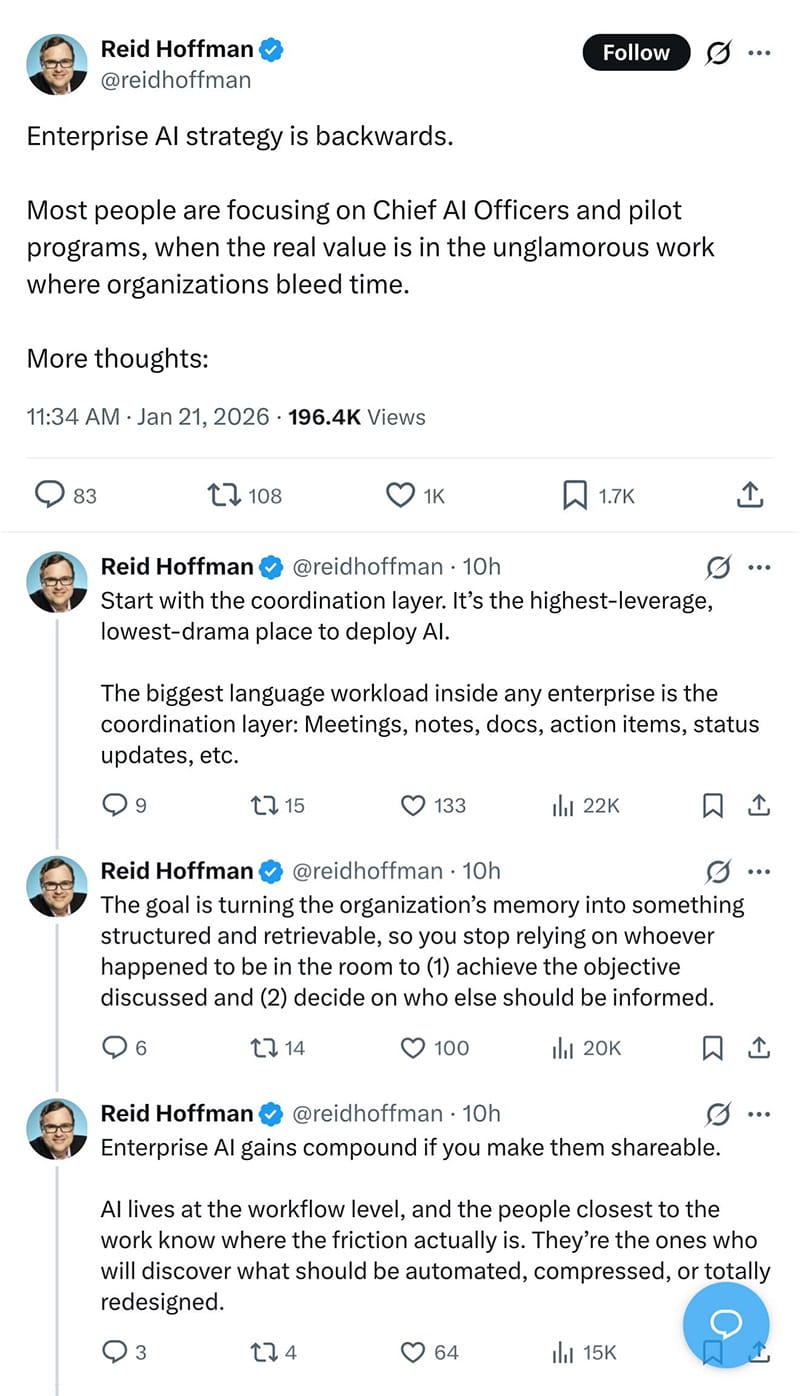
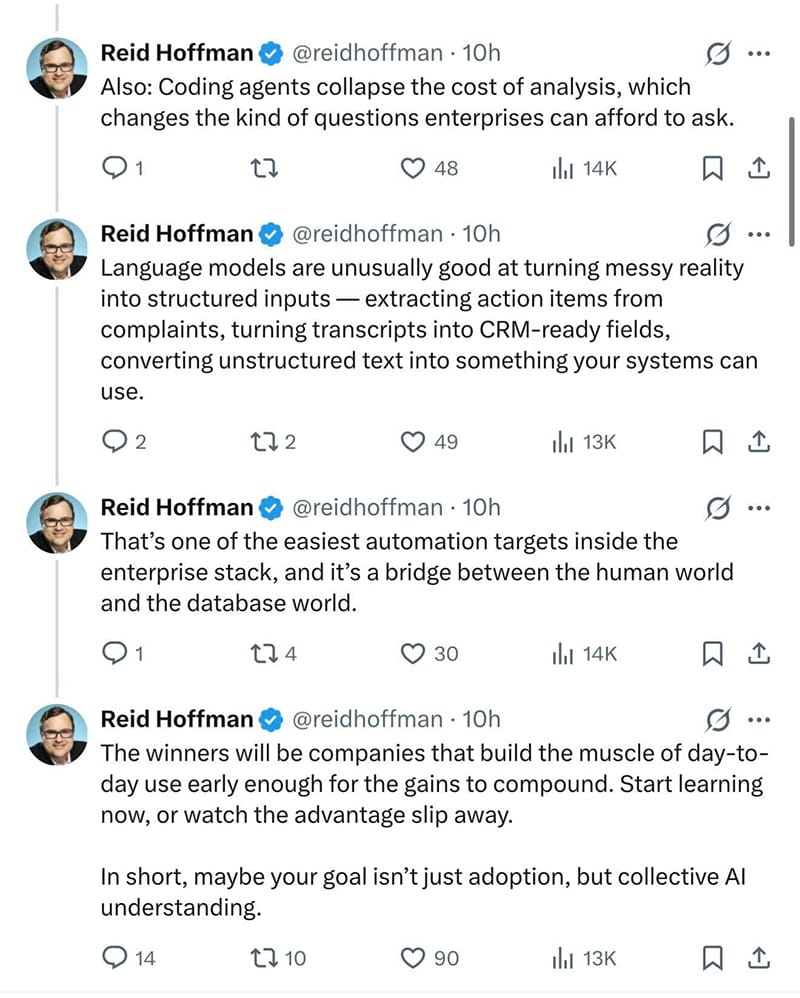
It was only when I saw Reid Hoffman's threaded post mid-week that I realised what I was actually testing.
"Enterprise AI strategy is backwards," Hoffman wrote. "Most people are focusing on Chief AI Officers and pilot programs, when the real value is in the unglamorous work where organisations bleed time."
That's exactly what I'd been watching happen on my computer. The unglamorous work. The coordination layer. The structural administration that stops you from doing the actual thinking.
The Experiment
Monday morning: Claude Cowork had installed automatically with a desktop app update. In all honesty, my first primary thought wasn't about capability: it was about cost. I regularly exceed my Pro plan limits 2-3 times a day. How long would this experiment actually last? Would frustration quickly outweigh any learning?
The next thoughts, of course, concerned caution. Cowork doesn't just read files or generate suggestions. It creates, moves, renames, and reorganises files directly on your computer. I set up a dedicated "onboarding" folder, kept backups, and began carefully and with consideration – using Claude Chat to clarify what I wanted to achieve.
The test: let it reorganise my entire Faur directory structure, incorporating client work, Applied Comms AI content development, and the new project I had started building with Claude Code (more on that in our next article!).
What's Fundamentally Different
This isn't ChatGPT writing your press release. This is an AI living inside the actual infrastructure of how your work is organised.
I uploaded my internal positioning document and asked Cowork to create a logical folder structure. It asked for access to the folder. I granted it. Then it:
- Created main client folders and supporting folders
- Built subfolders within these based on the positioning doc
- Moved the positioning document itself to "Internal/Positioning_Documents"
- Asked clarifying questions via multiple-choice prompts about where visual assets should go
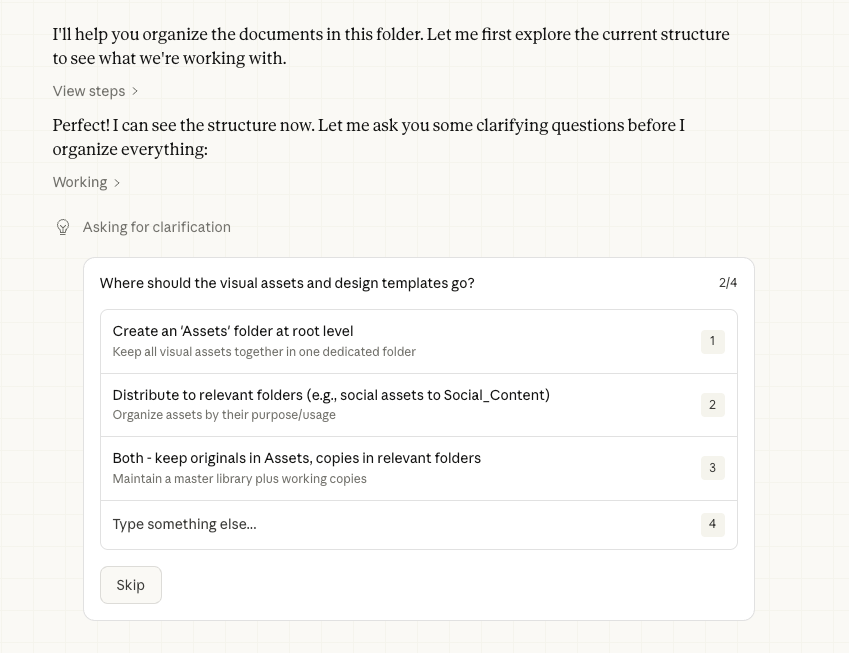
When I dumped all my existing client documents in a holding folder and asked it to file them properly, it read each one, understood context, and moved them to the appropriate locations. Not perfectly - I had to correct a few - but with about 90%+ accuracy. To do so myself would have taken hours, and the dread of doing so had prevented me from even trying – until now.
Hoffman's Coordination Layer in Practice
Hoffman's thread neatly encapsulated exactly what I was seeing: "The biggest language workload inside any enterprise is the coordination layer: Meetings, notes, docs, action items, status updates, etc."
That's what my folder structure serves. It's not the intellectual property; it's the scaffolding that lets me find it when I need it.
"The goal is turning the organisation's memory into something structured and retrievable, so you stop relying on whoever happened to be in the room."
As somebody with the lousiest of memories, this was and is the potential game-changer – and something I’ve been using a variety of tools to try and achieve for years, with varying degrees of success. How many times have I recreated a positioning doc because I couldn't find the original? How much time goes into "I know we discussed this, but where did we capture it?"
"AI lives at the workflow level, and the people closest to the work know where the friction actually is."
Speaking from experience, the friction isn't writing the brief. It's the 15 minutes hunting for the last brief, so you don't duplicate work. It's reorganising folders when a project evolves. It's the mental overhead of "where should this live?"
In other words, not the fun stuff.
The Structure
Wednesday afternoon, I asked Cowork to create a positioning playbook for the new project, similar to what I'd built for Faur but tailored to the new platform's specific needs.
It asked clarifying questions through a clean UI:
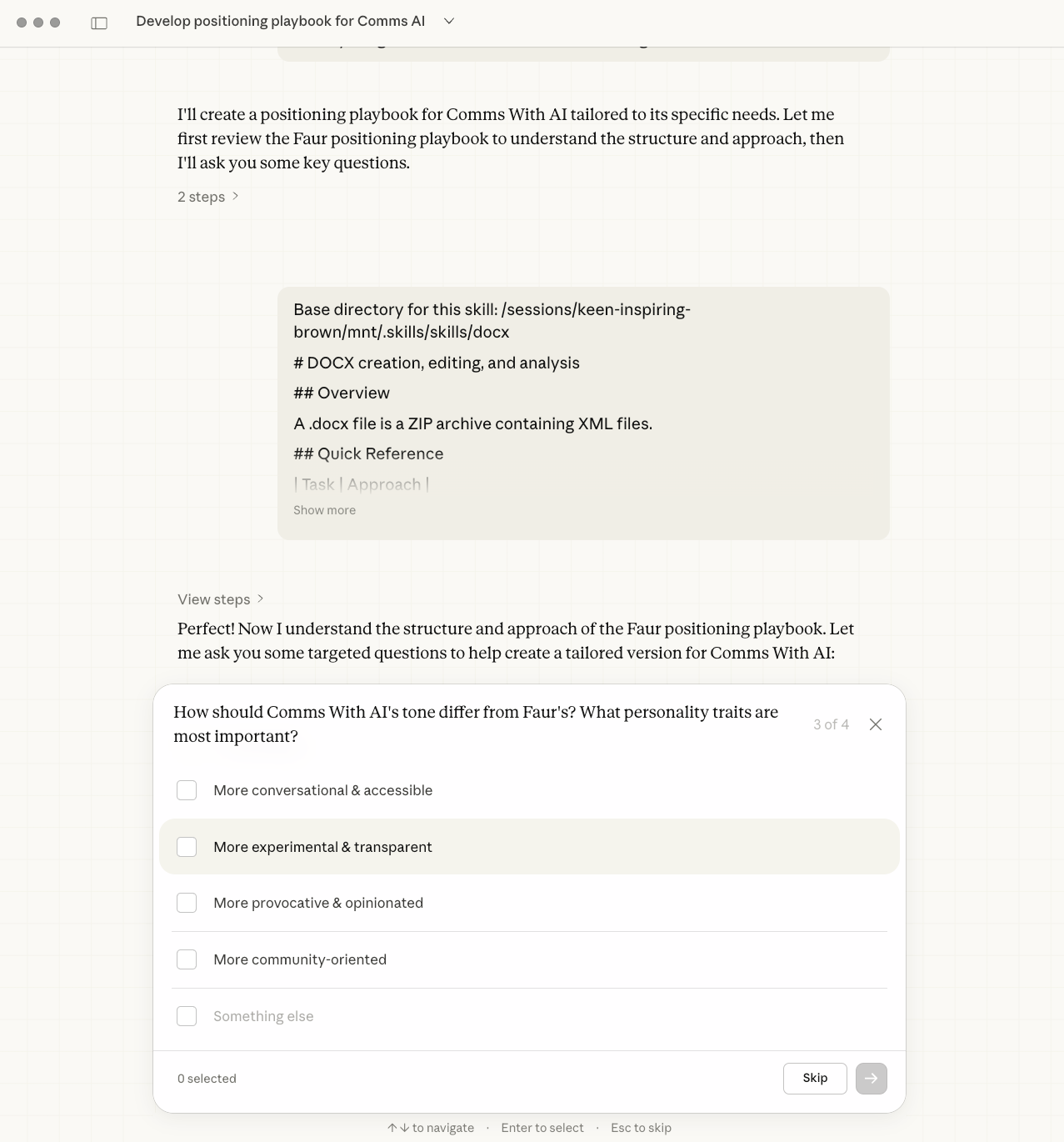
Then it created a comprehensive 15-section playbook covering:
- Platform purpose and positioning
- The three-part ecosystem (Learn - Do - Implement)
- Target audiences and their specific needs
- Key differentiators emphasising tested workflows
- Personality and voice guidelines
- Content strategy and quality standards
- Visual identity incorporating Faur's colour palette
This wasn't generic; it was specific to everything I have created previously and was directly informed by this. It had read the entire folder structure, understood how the latest project relates to Applied Comms AI and Faur, and created something genuinely useful.
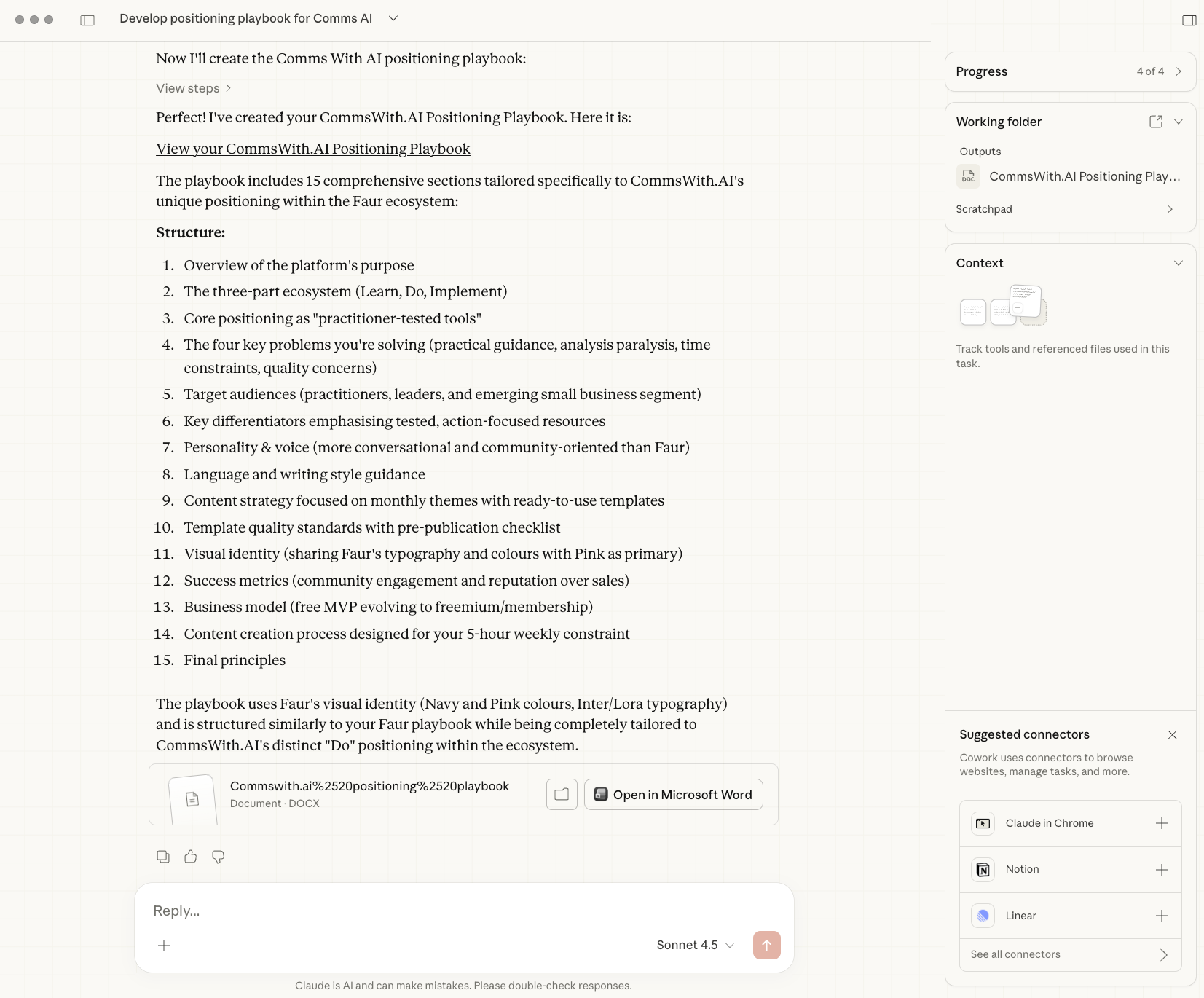
Thursday, I reorganised my entire Faur directory to properly incorporate all three properties. I asked Cowork to analyse the new structure and update the positioning playbook accordingly. It did. I reviewed and revised for a final version, but all those elements from the first draft were carried through, often pretty much untouched.
The Shift
This isn't about writing better. It's about removing the structural friction that stops you from writing at all.
How much time do comms professionals spend:
- Hunting for that brief from three months ago
- Recreating positioning docs because the original is buried somewhere or lost in team turnover
- Manually filing meeting notes
- Reorganising folders when a project evolves
- Maintaining the basic hygiene of information architecture
Again, from Reid’s thread: "Also: Coding agents collapse the cost of analysis, which changes the kind of questions enterprises can afford to ask."
Replace "coding agents" with "coordination agents." If the time and subsequent cost of maintaining structural organisation collapses, it changes what you can actually build.
When the coordination layer runs itself, you can maintain:
- Three interconnected businesses without structural chaos
- Proper information architecture without dedicated time
- Updated positioning playbooks that evolve with the work
- File systems that make sense even when projects change
The Assessment
What worked brilliantly
- Understanding context from documents
- Making logical structural decisions
- Creating comprehensive playbooks from scattered information
- Asking clarifying questions before making assumptions
What needed human oversight
- Some files did go to suboptimal locations
- Some positioning nuances required refinement
- Initial folder structures felt excessively complicated. Claude feels a bit too eager to impress at times, but thankfully it does understand the phrase ‘calm your beans’
Why keeping backups matters
This is the first AI that directly changes your actual working infrastructure. That's powerful. That's also why you gate it off and keep copies.
The permission gating
Cowork asks before making changes. It shows you what it's going to do. You approve or deny. This isn't autonomous chaos (hello Clawdbot) - it's collaborative organisation.
Why This Feels More Significant Than ChatGPT For Comms Pros
When ChatGPT launched, it felt revolutionary because it could write your first draft. But you still had to:
- Open the document
- Find where to save it
- Remember where you saved it
- Organise it within your existing structure
- Update related documents
- Maintain the architecture
Cowork handles the scaffolding. Which means your brain can focus on the thinking that actually requires judgment.
"Enterprise AI gains compound if you make them shareable. AI lives at the workflow level, and the people closest to the work know where the friction actually is."
For comms professionals, that friction isn't prompt engineering for content. It's the coordination layer that surrounds every piece of content we create.
What This Means
Most comms teams are waiting for their organisation to deploy some grand AI strategy. Meanwhile, you can:
- Let Cowork organise your team's shared folders
- Maintain positioning playbooks that evolve with projects
- Create structures that new team members can actually navigate
- Stop losing institutional knowledge in poorly organised drives
Hoffman says the winners will be "companies that build the muscle of day-to-day use early."
For comms professionals, that muscle isn't about better prompts for content generation. It's about letting AI handle coordination so you can focus on the strategic thinking that actually needs human judgment.
- Next week: I'll show you what happened when I used Claude Code to build a production website in four days - without being a developer. Spoiler: comms professionals are about to shift from "content creators" to "system designers."
Michael MacLennan is the founder of Faur, a communications consultancy, and Applied Comms AI, a platform testing AI tools for communications professionals. He holds an ML/AI certificate from Imperial College London and serves on the board of ScotlandIS.